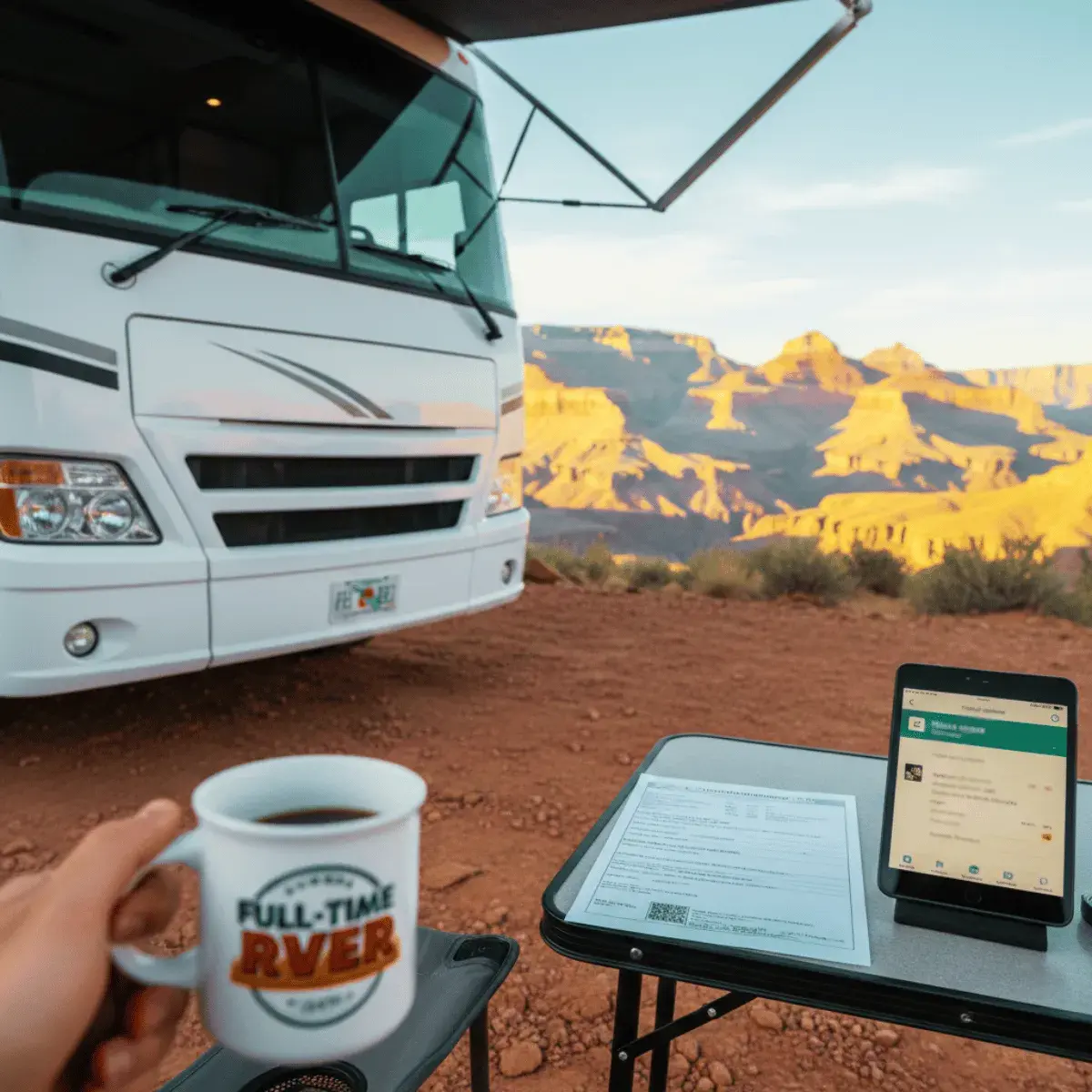
Establish Florida as your legal domicile with our step-by-step guidance. We help with the 1583, notarization, and DMV prep so you can focus on the road, not the paperwork. No state income tax. No vehicle inspections. No minimum stay.
As a U.S. citizen, you need a legal home state, even if you live on the road full-time. Your domicile determines where you hold your driver's license, register vehicles, file taxes, vote, and receive official mail from the IRS and banks. Without a clear domicile, you may face expired licenses, registration issues, and nowhere for important correspondence to land.
All three states have no income tax. Florida has no vehicle inspections of any kind. Texas eliminated safety inspections in 2025, but still requires emissions testing in 17 counties. South Dakota allows online license renewal for full-time travelers, but requires proof of at least one overnight stay in SD within the past year (hotel, campground, or RV park receipt). Florida has no such requirement, and no in-person visits after your initial DMV trip.
No. Unlike some states, Florida doesn't require you to spend 183 days (or any minimum) in the state to maintain domicile. What matters is your intent to make Florida your permanent home and demonstrating ties like a driver's license, voter registration, and using your Florida address on official documents. You can travel full-time and still be a Florida resident.
A Declaration of Domicile is a legal document you file with your Florida county clerk, stating your intent to make Florida your permanent home. It's authorized under Florida Statute §222.17. While not technically required, it's one of the strongest pieces of evidence you can have if anyone questions your residency. Filing typically costs around $10, and the form must be signed and notarized. We help you prepare this document as part of your setup.
You'll need proof of identity (passport or birth certificate), Social Security verification, two proofs of Florida address from two different sources (we provide your first proof; pair it with a bank or credit card statement showing your Florida address), and Florida vehicle insurance (required before getting your license). As of October 2024, Florida updated their address verification rules, so having the right documentation is more important than ever.
No. Florida has no safety inspections, emissions tests, or smog checks for any vehicles, including motorhomes and travel trailers. Register your RV once and renew online from wherever you're parked.
Costs vary by vehicle weight. First-time registration typically runs $225-450 total including title transfer, plates, and new resident fee. Annual renewal is usually $50-150 depending on weight class. Florida charges no personal property tax on vehicles, which can mean significant savings compared to states that do.
Florida requires Property Damage Liability ($10,000 minimum) and Personal Injury Protection ($10,000 minimum). For full-timers, we recommend a comprehensive full-timer policy that covers your RV as a residence, including bodily injury, comprehensive, and collision coverage. Florida is a no-fault state, so your own insurance covers you regardless of who caused an accident.
Yes, if it's the right kind. Florida DMV accepts addresses from licensed Commercial Mail Receiving Agents (CMRAs). We provide a real Florida street address (not a PO Box) with documentation specifically accepted by Florida DMV.
Florida has no state income tax on wages, retirement income, investments, or Social Security. There's also no estate or inheritance tax, and no personal property tax on vehicles. For RVers with income from remote work, retirement accounts, or investments, these savings can add up to thousands per year depending on your situation.
Many RVers complete the process in a 3-5 day trip to Florida. Day 1: Activate mail account, get Florida insurance, file Declaration of Domicile. Day 2: Visit DMV for license and register to vote. Day 3: Register vehicles. The exact timeline depends on DMV appointment availability. We give you a clear checklist so you know exactly what to bring and what to expect.
Ready to Make Florida Your Home Base?
RVers across the country simplify their domicile with Your Tax Base. See how we help you establish Florida residency without owning property or a minimum stay.
*Potential savings vary based on income and former state of residence. Establishing domicile requires demonstrating intent and connection to Florida. Your former state may still claim tax jurisdiction. This information is for educational purposes only and does not constitute tax, legal, or financial advice. Consult a qualified professional for guidance specific to your situation.